

spiritual contribution : ค้นหาหนังสือธรรมะ หน้า 22 / 2
หน้าหนังสือทั้งหมด
95
Dai Buddhist Manuscripts in Yunnan's Dehong Prefecture
It is noteworthy that there is a community of Dai people in the Dehong Autonomous Prefecture in the west of Yunnan, and a wide range of Buddhist manuscripts are stored there. Palm-leaf manuscripts are
This text discusses the unique tradition of Buddhist manuscripts among the Dai people in Dehong Autonomous Prefecture of Yunnan, where various types of manuscripts are produced. Most texts utilize sa-
101
Understanding the Pāli Verses and Buddhist Doctrine
The Text
The first nine leaves are inscribed with Pāli verses and a commentary in Tai Yuan.4 The final leaf of the manuscript is an addendum, inscribed with a stanza of the Dvatiṃsa-mahāpuruśa-lakkhaṇ
The manuscript presents Pāli verses and commentary in Tai Yuan, summarizing Buddhist doctrines about the Buddha's physical body and wisdom. It includes thirty stanzas highlighting qualities like divin
103
The Historical Significance of Dhammakāya Verse in Thai Buddhism
Although there is no date on the manuscript, the dhammakāya verse has been known in the Lan Na regions for many centuries. It also appears on a 16th century stone inscription unearthed at the site of
The dhammakāya verse has been recognized in the Lan Na regions for centuries, with historical inscriptions confirming its existence dating back to the 16th century, specifically at Wat Tham Suea in Ph
108
The Sublime Attributes of the Lord
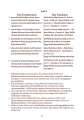
Sabbāñutāläñā pävarasiãm] is the sublime head of the Lord.
Nibbānarammaña pavarasitakesaṃ: the wisdom that recognizes Nibbāna as the object of consciousness is the sublime hair of the Lord. Catuttajj
This text discusses the sublime qualities of the Lord, emphasizing various forms of wisdom, such as the recognition of Nibbāna as the object of consciousness and the wisdom that leads to divine hearin
134
Exploring Daoist and Buddhist Visualization Techniques
The second one is the "Golden Palace" which is located below the heart and spleen, and the last field is the "Mud Pill Court" or the Palace of Ni-wan which is located about three inches within the hea
The text discusses the Golden Palace and the Mud Pill Court in relation to Daoist meditation. It highlights the visualization techniques associated with the cinnabar field, emphasizing its significanc
55
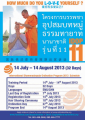
International Dhammadayada Ordination Program 2013
HOW MUCH DO YOU L-O-V-E YOURSELF ?
看您有多爱自己?
โครงการบรรพชาอุปสมบทหมู่ธรรมทายาทนานาชาติ IDOP รุ่นที่ 11
国际佛法新传者短期出家活动
14 July – 14 August 2013 (32 Days)
International Dhammadayada Ordination Program 201
The International Dhammadayada Ordination Program (IDOP) offers a unique opportunity for individuals to experience monastic life. Scheduled from July 14 to August 14, 2013, this 32-day program welcome
32
Ceremony of Recognition Among Monks
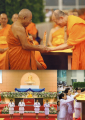
- The first image (top) shows two monks, one handing an award or plaque to the other, with other monks in the background.
- The second image (bottom left) depicts a formal event with a seated monk in
This content describes a set of images depicting a ceremonial event with monks. The first image portrays one monk awarding another, indicating a recognition of merit. The second image features a monk
10
Ceremonial Gatherings in Monastic Life
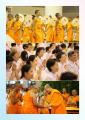
- The first image shows young monks dressed in orange robes, walking in a line, some holding fans or parasols.
- The second image depicts a group of women, most with their hands in a prayer gesture, s
This content portrays the rich traditions and ceremonial gatherings within monastic life, showcasing young monks in their distinctive orange robes, participating in processions. Women in white attire
16
Understanding Reproductive Kamma
Kamma causes reproductive act, a final phase of life before departing this present world or a final idea or mind that is attached to is called reproductive kamma.
If one has an idea on merits when on
Reproductive kamma represents the final thoughts and mental conditions one experiences before departing this world. A positive focus on merits and virtues leads to a better state of mind and body, whi
101
หลักฐานธรรมภายในคัมภีร์พุทธโบราณ
หลักฐานธรรมภายในคัมภีร์พุทธโบราณ 1 ฉบับประชาชน
ประดาไดด้วยรัตนชาติ และธรรมภายของตกคตเปรียบการไม่แตกทำลายไปของมัดรายในแม่น้ำคงคา ซึ่งยังคงอยู่ที่เดิมแม้ถูกไฟผาลลายอยู่24
ในด้านการปฏิบัติ คัมภีร์สังกาว
บทนี้พูดถึงหลักธรรมในคัมภีร์พุทธโบราณที่อธิบายธรรมชาติของวิญญาณและการทำลายกิเลส เพื่อเปิดเผยความบริสุทธิ์โดยกำเนิด อายวิญญาณถูกเปรียบเทียบกับคลื่นในมหาสมุทรที่มีบทบาทสำคัญในการสร้างและรักษาสรรพชีวิต ท
6
Payasi Sutta: Rebirth and Karma
This Life Next Life
Payasi Sutta
(Rebirth and Karma)
Thus have I heard.
1. The venerable Kumara Kassapa¹ was once walking on tour in Kosala together with a great company of bhikkhus, to the number o
The Payasi Sutta recounts the teachings of venerable Kumara Kassapa during his time in Setavya. It narrates the challenges faced by Payasi, a chieftain in this city, as he grapples with misconceptions
14
The Examination of Moral Consequences
6. ' Even though Master Kassapa says thus, it still appears to me that not one of these things exists. '
' Have you, Prince, any proof to establish that they do not exist ? '
' I have, Master Kassapa.
In this dialogue, the protagonist questions Master Kassapa about the existence of moral consequences for unethical actions. Despite Master Kassapa's assertions, the protagonist cites personal experien
26
Questioning the Existence of a Spiritual Realm
10. 'Even though Master Kassapa says so, it still appears to me that not one of these things exists. '
'Have you any further evidence, prince ?' . . .
'I have, Master Kassapa. '
'As how ? '
'Here it i
In a thought-provoking dialogue, a prince challenges Master Kassapa's assertions about the existence of a spiritual realm. The prince draws upon personal experiences with friends who lived virtuous li
30
Understanding the Divine Eye and Existence
This Life Next Life
28
We do not believe him when he says these things. 'That, Prince, is just as if there were a man born blind who could not see objects as dark or bright, as blue, yellow, red or
In this passage, the conversation between Prince and Master Kassapa highlights the limitations of human perception. The parable of the blind man illustrates how disbelief stems from unawareness. The t
32
This Life Next Life
This Life Next Life
30
In this way, Prince, is the other world to be seen, and not, even as you imagine, by this fleshly eye. Let this be a proof to you that there is another world, that there are b
In this text, Prince questions Master Kassapa about the existence of another world and the nature of existence beyond death. The discussion revolves around the moral behavior of Wanderers and Brahmins
78
The Importance of Meaningful Sacrifice
It is just as if a farmer, Prince, were to enter a wood taking with him plough and seed, and were there, in an untilled tract, in unfavourable soil, among unprouted stumps, to plant seeds that were br
In this passage, Master Kassapa illustrates the difference between ineffective sacrifices and those that are rooted in right intention and character. A farmer with poor seeds and unfavorable condition
130
This Life Next Life
This Life Next Life
ISBN : 978-616-91637-2-5
Research : Siripunno
English editor : Dr. Apiraporn Vasavakul
Illustration : WWW.DMC.TV
Graphic Design : Mr. Wittaya Suttisiriyothin
First Edit
This Life Next Life is a comprehensive exploration of Buddhist teachings and principles related to moral and spiritual development. Compiled by Siripunno and edited by Dr. Apiraporn Vasavakul, this bo
567
The Heart of Dhammakaya Meditation
Oslo: Hermes Pub.
Jayamanggalo, Phra Maha Sermchai. 1997. The Heart of Dhammakaya Meditation. 2nd ed. Bangkok: Dhammakaya Buddhist Meditation Foundation.
Jherora. 2013. ทางสายกลาง (ตอนที่ 2) [cited 15
The text discusses the essence of Dhammakaya meditation, emphasizing its relevance in achieving mindfulness and spiritual growth. The content encompasses various scholarly works and references related
577
The Interfusion of Chinese and Indian Cultures in Central Asia
Visualization of the Buddhas: The Interfusion of the Chinese and Indian Cultures in Central Asia as Reflected in a Fifth Century Apocryphal Sutra." PhD Dissertation. Yale University. Yamabe, Nobuyoshi
This dissertation examines the merging of Chinese and Indian influences in Central Asia, particularly through apocryphal Buddhist texts. It also discusses various publications that delve into Buddhist
85
หลักฐานธรรมภายในคัมภีร์พุทธโบราณ
หลักฐานธรรมภายในคัมภีร์พุทธโบราณ 1 ฉบับรวมงานวิจัยโดยอ 번호
14 สมณะอังอัจังกิว่ากว่า ในสมันที่น่าท้าทายท่านอธิบายว่า ว่าชวาทุกคนในเดียงมัมหาขยาย และเนียน จจะเรียนท่องโลกเหล่านั้นที่สามารถวัดได้ 5 และค
บทความนี้สำรวจหลักฐานธรรมจากคัมภีร์พุทธโบราณที่มีความสำคัญ ทำการวิเคราะห์เกี่ยวกับอักษรตัวเขียนเฉี่ยงที่ใช้ในพื้นที่ Eastern Turkestan โดยการค้นพบของ Sir Aurel Stein และวิจัยโดย ดร.ชนิดา จันทารศรีโศล.